Introduction
Lucy, known scientifically as Australopithecus afarensis, is one of the most famous fossil discoveries in the history of human evolution. Found in 1974 in the Afar region of Ethiopia, Lucy is estimated to be about 3.2 million years old, making her one of the earliest known human ancestors.
Her discovery provided groundbreaking evidence about how early humans walked upright and how human evolution progressed in Africa.
Discovery
Lucy was discovered by paleoanthropologist Donald Johanson and his team at Hadar. The skeleton was about 40% complete, which is an extraordinary find for fossils this old. Her small stature and features showed a mix of apelike and human characteristics.
The fossil was named “Lucy” after the Beatles song “Lucy in the Sky with Diamonds,” which the team celebrated listening to at the excavation site.
Physical Features
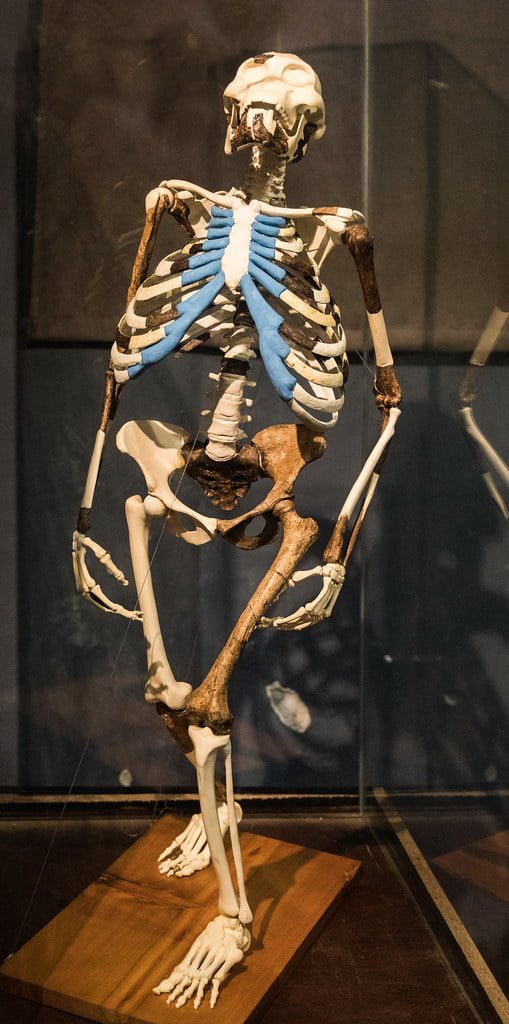
Lucy stood about 1.1 meters tall and weighed roughly 29 kilograms. Her pelvis and leg bones indicate that she walked upright, similar to modern humans, while her arms and skull showed adaptations for climbing trees.
This combination of traits helped scientists understand the transition from tree-dwelling primates to fully bipedal humans.
Importance to Science
Lucy’s discovery revolutionized our understanding of human evolution. She proved that bipedalism developed long before larger brains in human ancestors, changing the way scientists study human origins.
The find also reinforced Africa’s role as the cradle of humanity, demonstrating that modern humans have deep roots in this region.
Legacy
Lucy remains a symbol of discovery, science, and Ethiopia’s rich prehistoric heritage. Her fossil is displayed in museums and continues to inspire researchers and the public alike.
Dinkinesh, which means “you are marvelous” in Amharic, is another name for Lucy in Ethiopia, honoring her significance to both science and Ethiopian culture.